Akhtar Hameed Khan National Centre for Rural Development (AHKNCRD), Islamabad is an apex training/capacity building institute of the country and an Attached Department of Establishment Division, Government of Pakistan. AHKNCRD is also a link institution to work with African Asian Rural Development Organization (AARDO) on behalf of Government of Pakistan. The AARDO is an inter-governmental organization, which has thirty-two (32) member countries from Asia and Africa. AARDO is responsible for promoting the cause of rural development and poverty alleviation in its member countries from Asia and Africa. Its headquarter is based at New Delhi, India. Of its six Regional Offices, the Regional Office for South & Central Asia is situated in Pakistan, at NCRD.
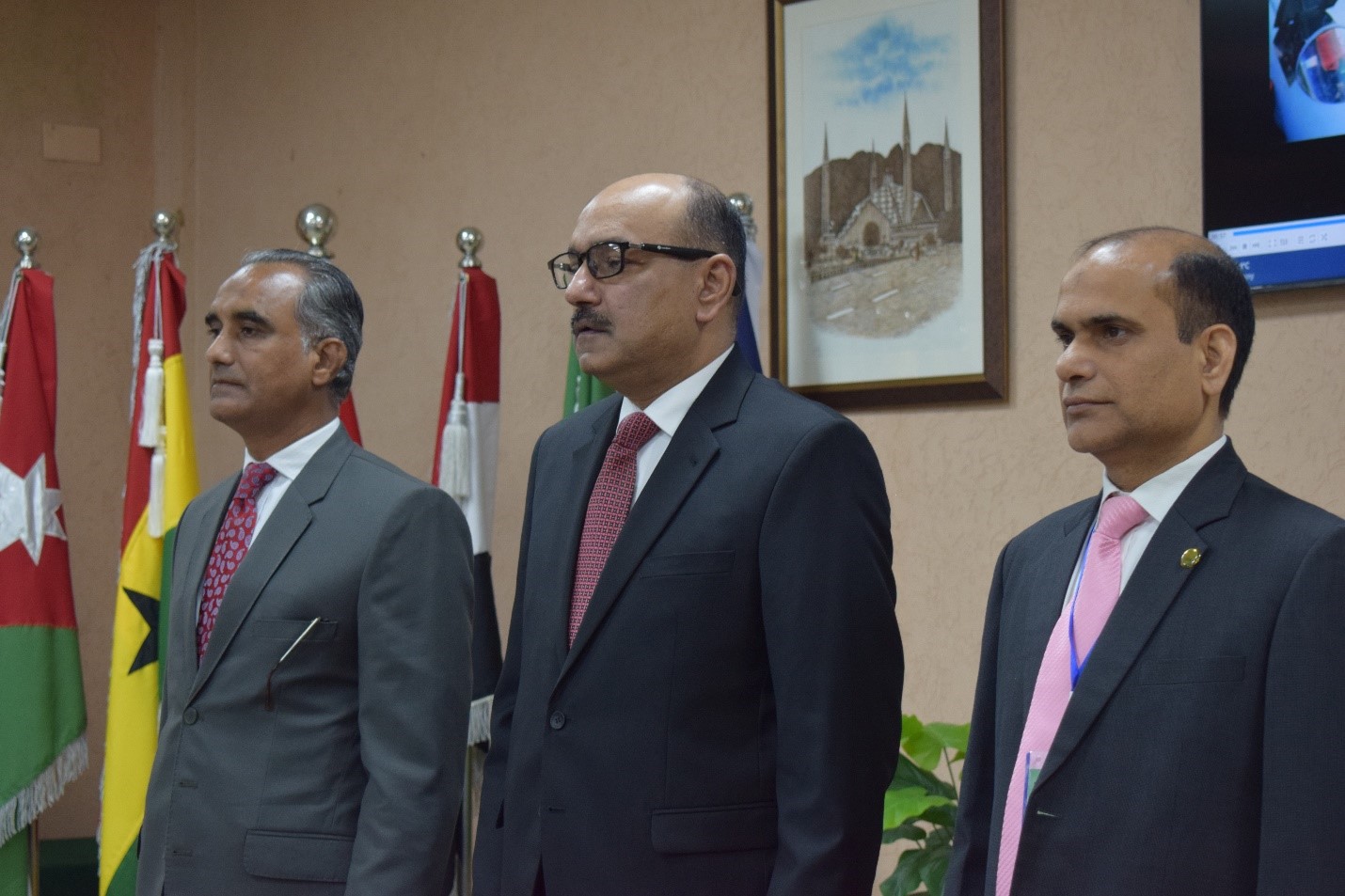
NCRD has been conducting collaborative training programmes with AARDO at NCRD, Islamabad. Once again, this year, NCRD is conducting International Training Programme on “Disaster Management and Climate Change Adaptation” in collaboration with AARDO at NCRD during October 15-23, 2025. International participants including one AARDO representative and seventeen (17) from 12 AARDO member countries, including Pakistan, Bangladesh, Egypt, Eswatini (Kingdom of Swaziland), Ghana, Jordan, Kenya, Lebanon, Mauritius, Sri Lanka, Tunisia and Zambia are attending this training programme. The training programme was inaugurated on October 16, 2025. The inaugural ceremony was chaired by worth chief guest, Barrister Nabeel A. Awan, Secretary, Establishment Division, Islamabad. AARDO Secretariat was also represented by Mr. Aslam Khan, Head Finance and Coordinator to Regional AARDO Office for South and Central Asia. In addition, H.E. Dr. Maen Khreasat, Ambassador of the Hashemite Kingdom of Jordan to Pakistan; H.E. Md. Iqbal Hussain Khan, High Commissioner, Bangladesh; H. E Mr. Abdul Aziz Issa, and Ambassador of the Republic of Lebanon in Pakistan. The ceremony was also graced by the presence of eminent dignitaries including; Mr. Riaz Maitlo, Deputy Secretary, Establishment Division; Mr. Abdul Ahad, Deputy Secretary (PMC), Establishment Division; Prof. Dr. Muhammad Irfan Khan, Former Dean, International Islamic University Islamabad (IIUI); Mr. Raheel Nazir, Chief Executive Officer, Rah e Nau Constellation; and Mr. Arif Rasheed Goheer, Executive Director, Global Impact Studies Centre. The ceremony was also joined by Former Director Generals including Dr. Zafar Qadir; Mr. Muhammad Asghar Chaudhary; Mr. Arshad Ahmed; and Mr. Jamil Ahmed.
In his welcome address, Director General NCRD, Mr. Israr Mohammad Khan, expressed great honor at the opening of the AHKNCRD-AARDO Collaborative International Training Programme on “Disaster Management and Climate Change Adaptation.” He welcomed the delegates from AARDO member countries, delegates of the Diplomatic Corps and other dignitaries and commended the efforts of AARDO officials, especially Dr. Manoj Nardeosingh, Secretary General AARDO, for organizing the event in Pakistan. He also thanked Barrister Nabeel Ahmed Awan for joining the inaugural session. DG NCRD highlighted how AARDO member countries, including Pakistan, are increasingly vulnerable to climate change impacts, underscoring the urgent need for robust disaster management strategies and collaborative adaptation measures to build resilience. He also emphasized the importance of equipping stakeholders with knowledge and tools to effectively address the intertwined challenges of disaster management and climate change adaptation. He expressed his views that the collaboration promises valuable exchanges of experiences and best practices from across the AARDO countries. Mr. Israr expressed a strong presumption that the Training Workshop, complemented by in-house sessions and field visits, would provide profound insights to the participants and experts from the member countries. He expressed gratitude to AARDO for its support and extended appreciation to the participants from member countries, hoping that they embark on the journey to deepen their understanding of disaster management and climate change adaptation.
During his address, Barrister Nabeel Ahmed Awan, Secretary, Establishment Division thanked the delegates for joining the training programme and emphasized the importance of regional collaboration in addressing the dual challenges of disaster management and climate change adaptation. He recalled his tenure as Chairman of Planning and Development Board in Lahore, Punjab and the measures his organization had to take on the onset of ever increasing smog in that region. In addition, Secretary, Establishment Division also offered the International Training Participants to visit his former organization, P&D Board during their visit to Lahore. He reiterated importance of supporting member countries through knowledge sharing, capacity building, and fostering innovative solutions to promote sustainable development. Furthermore, he commended the efforts of NCRD for its contribution for the cause of rural development and poverty alleviation in Pakistan and other AARDO member countries through collaboration with AARDO. Barrister Nabeel hoped that the training program would equip participants with the knowledge and skills needed to implement effective disaster management and climate adaptation strategies in their respective countries.
During his opening remarks, Mr. Aslam Khan, Head of Finance and Coordinator to the Regional AARDO Office for South and Central Asia appreciated NCRD’s continued collaboration with AARDO in promoting knowledge exchange and capacity building among member countries. He emphasized the importance of South-South cooperation in addressing emerging challenges related to disaster management and climate change adaptation. He highlighted that such training programs play a vital role in strengthening institutional linkages, enhancing professional skills, and fostering a shared vision for sustainable rural development across the African-Asian region.
After the addresses, an introductory session of the participants took place, followed by a group photo and a tea break.